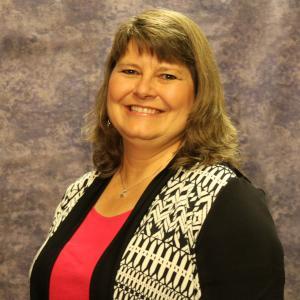
My current research and scholarship aligns with my professional interests in graduate education and service delivery in health service psychology, and faculty and student development and success.
Much of my recent work addresses training and service delivery in health service psychology (HSP). My colleagues, graduate students, and I have pursued several projects, including (1) mental health concerns and financial stress among clinical psychology doctoral students (nationwide, do our graduate students have significant mental health concerns, life and financial stress? Are minoritized and marginalized students differentially impacted?); (2) the path to licensure in health service psychology (how does the current licensure exam process impact access to a well-trained and diverse, representative workforce in HSP? How can the exam process be evaluated and modified to improve this access?) and (3) clinician training and client outcomes of evidence-based services provided in our clinical program’s Psychological Services Clinic (MU PSC). The MU PSC’s services include grant-funded programs for adults and youth coping with COVID-related distress, rural citizens coping with farm/ranch-related stressors, and youth receiving evidence-based assessment and intervention – our work here addresses questions about who is utilizing our services (are services accessible and acceptable to traditionally underserved individuals and families? Are services effective?). Recent projects have also addressed cultural adaptations of evidence-based interventions (e.g., CBT for insomnia, minority stress interventions) for individuals with marginalized racial or LBGTQ+ identities. Together, these projects help to inform the scientific literature, policies, and best practices in graduate education and training and in clinical service delivery. I also have a few projects in development that focus on how academic leaders can cultivate inclusive and effective environments that support student, faculty, and staff belonging, engagement, and excellence.
My current professional interests involve supporting faculty and student success. As Chair of Psychological Sciences, I am privileged to work alongside and support the professional development and success of faculty and students in clinical, cognition and neuroscience, developmental, quantitative, and social/personality areas of psychology. As a Provost's Faculty Fellow for Faculty Success, I have the opportunity to extend this support to faculty across campus. Before becoming Chair of Psychological Sciences, I served for nearly 25 years as Director of Clinical Training for the MU clinical psychology doctoral program and Executive Director of the MU Psychological Services Clinic (http://psychology.missouri.edu/clinic, which serves as the training program for the doctoral program and clinical psychology and the umbrella organization for our Center for Evidence-Based Youth Mental Health. In these roles, I was proud to part of outstanding education of our graduate students in clinical science research and evidence-based clinical practice, as well as part of our program’s strong contributions to the scientific literature and evidence-based services delivery in the community. I continue this work through my research and scholarship.
Beyond Mizzou, I continue to be highly involved in the national landscape of education and training, including current and past roles in:
- Council of Graduate Departments of Psychology (Board Member, 2024-present, Secretary, 2026-present)
- Education and Training in Professional Psychology journal (Editor, 2019-2024; Incoming Editor, 2018; Associate Editor on founding Editorial Board, 2006-2013)
- Council of Chairs of Training Councils, Chair, 2019-2021 (umbrella organization for health service psychology doctoral, internship, and post-doctoral training councils and training and education stakeholders across the US and Canada)
- Council of University Directors of Clinical Psychology (member of various committees and Board of Directors, Associate Chair, and Chair (2018-2019), liaison to the Council of Chairs of Training Councils, APA’s Board of Educational Affairs)
APA Commission on Accreditation (as a site visitor, 2004-present; Commissioner 2010-2015; Associate Chair, 2014; Chair, 2015)
(stuent co-authors indicated with *)
Professional Training Issues
book:
Bell, D. J., Foster, S. L., & Cone, J. D. (2020). Dissertations and Theses from Start to Finish, 3rd Edition. Washington, Dc: APA Press. https://doi.org/10.1037/0000161-000
articles:
Tabachnick, A. R., Call. C.C., Tung, I., Sequeira, S. L., Ravindranath, O., Boness, C. L., Sortor, L., Ogbu-Nwobodo, L., Ley, D., Eckstrand, K., & Bell, D. J. (2026). Clinical Psychology in the Post-Dobbs Era: Navigating Clinical Practice, Research, and Advocacy in a Changing Sexual and Reproductive Health Landscape. Clinical Psychological Science, 14, 3-23. Online First publication 6/27/2025. https://doi.org/10.1177/21677026251346150
Bell, D. J., Burnes, T. R., Callahan, J. L., Crowley, S. L., McCubbin, L., & Self, M. M. (2024). Passing the torch: Reflections and recommendations to advance training and education in professional psychology. Training and Education in Professional Psychology, 279-283. https://doi.org/10.1037/tep0000499
Grassetti, S. N., Soto, J. A., Bridges, A. J., Bell, D. J. (2024). Introduction to the special issue on training and educating antiracist psychologists: What are we doing and where do we go from here? Training and Education in Professional Psychology, 18, 177-182. https://doi.org/10.1037/tep0000482
*Szkody, E., *Hobaica, S., *Owens, S., *Boland, J., Washburn, J., & Bell, D. (2023). Financial stress and debt in clinical psychology doctoral students. Journal of Clinical Psychology, 79, 835–853. https://doi.org/10.1002/jclp.23451
*Hobaica, S., *Szkody, E., *Owens, S., *Boland, J., Washburn, J., & Bell, D. (2021). Mental Health Concerns and Barriers to Care Among Future Health Service Psychologists. Journal of Clinical Psychology, 77, 2473-2490. https://doi.org/10.1002/jclp.23198
*Sheerin, K., *Tugendrajch, S., Presser, N., & Bell, D. (2021). Implementing Skills for Psychological Recovery at a psychology training clinic during COVID-19. Cognitive and Behavioral Practice, 28, 507-518. https://doi.org/10.1016/j.cbpra.2021.03.001
Callahan, J. L., Bell, D. J., Davila, J., Johnson, S. L., Strauman, T. J., & Yee, C. M. (2021). Inviting ASPPB to Address Systemic Racism: Reply to Turner et al. (2021). American Psychologist. 76(1), 167–168. https://doi.org/10.1037/amp0000801
Callahan, J. L., Bell, D. J., Davila, J., Johnson, S. L., Strauman, T. J., & Yee, C. M. (2020). The enhanced examination for professional practice in psychology: A viable approach? American Psychologist, 75, 52–65. https://doi.org/10.1037/amp0000586
Hames, J. J., Bell, D. J., Perez-Lima, L. M., Holm-Denoma, J. M., Rooney, T., Charles, N. E., Thompson, S. M., Mehlenbeck, R. S., Tawfik, S. H., Fondacaro, K. M., Simmons, K. T., & Hoersting, R. C., (2020). Navigating uncharted waters: Considerations for training clinics in the rapid transition to telepsychology and telesupervision during COVID-19. Journal of Psychotherapy Integration, 30, 348-365. http://dx.doi.org/10.1037/int0000224
Bell, D. J., & McCutcheon, S. R. (2020). Moving the needle to promote education and training in substance use disorders and addictions: Special issue introduction. Training and Education in Professional Psychology, 14, 1-3. http://dx.doi.org/10.1037/tep0000305
Bell, D. J., Self, M. M., Davis, III, Cl, Conway, F., Washburn, J. J., & Crepeau-Hobson (2020). Health service psychology education and training in the time of COVID-19: Challenges and opportunities. American Psychologist, 75, 919-932. http://dx.doi.org/10.1037/amp0000673.
Bell, D. J., Burnes, T. R., Callahan, J. L., Crowley, S. L., Frierson, G. M., & McCutcheon, S. R. (2019). Next steps for training and education in professional psychology: Advancing the science and
expanding our reach. Training and Education in Professional Psychology, 13, 1-3.
Roberts, M. C., & Bell, D. J. (2018). Editorial statement on censorship of terminology or concepts. Training and Education in Professional Psychology, 12, 1.
Bell, D., Bieschke, K., Zlotlow, S., Paternite, C., Illfelder-Kaye, J., McCutcheon, S., Knauss, L., Klonoff, E., & Wall, J. (2017). New Standards of Accreditation in Health Service Psychology: Rationale, Opportunities, and Challenges. Training and Education in Professional Psychology, 11, 207-218.
*Hausman, E. M., *Quetsch, L. B., *Luebbe, A., *Martin, E., & Bell, D. J. (2017). Public Disclosure by Accredited Doctoral Programs: Prospective Applicants' Views on Clarity, Helpfulness, and Sufficiency of Information to Make Application Decisions. Training and Education in Professional Psychology, 11, 100-107.
Bell, D. J., & *Hausman, E. (2014). Training Models in Professional Psychology Doctoral Programs. In B. Johnson & N. Kaslow (Eds), The Oxford Handbook of Education and Training in Professional Psychology.
Bieschke, K. L., Bell, D. J., Davis, C., Hatcher, R., Peterson, R., & Rodolfa, E. (2011). Forests, grazing areas, water supplies, and the internship imbalance problem: Redefining the paradigm to implement effective change. Training and Education in Professional Psychology, 5, 123-125.
Bieschke, K., Bell, D., Davis, C., Hatcher, R., Peterson, R., & Rodolfa, E. (2009). Establishing and assessing core competencies in professional psychology: A call to action. Training and Education in Professional Psychology, 3, S1-S4.
Bell, D. J. (2009). Balancing breadth and specialized training in doctoral education: (How) can we do it better? Clinical Psychology: Science and Practice, 16, 364-369.
Youth Anxiety, Depression, & Adjustment
*Irvin, K., Bell, D., Steinley, D., & Bartholow, B. (2022). The thrill of victory: Savoring positive affect, psychophysiological reward processing, and symptoms of depression. Emotion, 22, 1281-1293. https://doi.org/10.1037/emo0000914
*Bernardin, C., Lewis, T., Bell, D., & Kanne, S. (2021). Associations Between Social Camouflaging and Internalizing Symptoms in Autistic and Non-Autistic Adolescents. Autism. https://doi.org/10.1177/1362361321997284
*Berry, J. R. & Bell, D. J. (2020). Children's Evaluation of Everyday Social Encounters Questionnaire: Short Form Validation. Psychological Assessment. Advance online publication. https://doi.org/10.1037/pas0000974
*Irvin, K., Bartholow, B., & Bell, D. (2019). Hedonic processing and depression: A joint ERP and behavioral study. Psychophysiology, 57, S41-S41. [published abstract]
*Irvin, K., Bartholow, B., & Bell, D. (2019). The thrill of victory: Savoring positive affect, the reward positivity, and symptoms of depression. Psychophysiology, 56, S104-S104. [published abstract]
*Mancini, K. J., *Luebbe, A. M., & Bell, D. J. (2016). Valence-specific emotion transmission: Potential influences on parent-adolescent emotion co-regulation. Emotion. 16, 567-574. http://dx.doi.org/10.1037/emo0000160.
*Fussner, L.M.; *Luebbe, A. M., & Bell, D. J. (2015). Dynamics of positive emotion regulation: Associations with youth depressive symptoms. Journal of Abnormal Child Psychology, 43,475-488. http://dx.doi.org/10.1007/s10802-014-9916-3.
*Luebbe, A. M., & Bell, D. J. (2014). Positive and Negative Family Emotional Climate Differentially Predict Youth Anxiety and Depression via Distinct Affective Pathways. Journal of Abnormal Child Psychology, 42, 897-911. DOI 10.1007/s10802-013-9838-5
*Allwood, M.A., *Baetz, C., *DeMarco, S., & Bell, D. J. (2013). Depressive symptoms, including lack of future orientation, as mediators in the relationship between adverse life events and delinquent behaviors. In P. Kerig (Ed), Trauma and Juvenile Delinquency: New Directions in Research and Intervention. London: Taylor and Francis.
*Luebbe, A. M., Fussner, L. M., *Kiel, E.J., *Early, M. C., & Bell, D. J. (2013). Role of adolescent and maternal depressive symptoms on transactional emotion recognition: Context and state affect matter. Emotion, 13, 1160-1172.
*Allwood, M.A., *Baetz, C., *DeMarco, S., & Bell, D. J. (2012). Depressive symptoms, including lack of future orientation, as mediators in the relationship between adverse life events and delinquent behaviors. Journal of Child and Adolescent Trauma, 5, 1-15.
*Allwood, M.A., Bell, D. J., & *Horan, J. C. (2011). Posttrauma numbing of fear, detachment, and arousal predict delinquent behaviors in early adolescence. Journal of Clinical Child and Adolescent Psychology, 40, 659-667.
*Luebbe, A. M., Bell, D., Allwood, M., Swenson, L. & Early, M. (2010). Social information processing in children: Specific relations to anxiety, depression, and affect. Journal of Clinical Child and Adolescent Psychology, 39, 386-399.
Bell, D. J., *Luebbe, A., M., *Swenson, L., P., & *Allwood, M. A. (2009). Children’s Social Information Processing: Comprehensive Assessment and Relation to Internalizing Problems. Journal of Clinical Child & Adolescent Psychology, 38, 705-720.